I stopped looking for the tool and built it instead
A background remover built in a coffee break — and the first tool I stopped keeping to myself.
- Role
- Designer & builder — the whole thing
- Timeline
- ~10 minutes, one coffee break
- Team
- Solo
- Platform
- Web · live at clearcut-pi.vercel.app
- Status
- Live & public
The problem
As a designer I constantly need clean cut-outs for mockups, and I kept losing time hunting for a background remover that wasn't paywalled, watermarked, or asking me to sign up.
The outcome
A single-purpose tool that does one job with one control — and the first of my side builds I actually put in front of people.
If you read nothing else
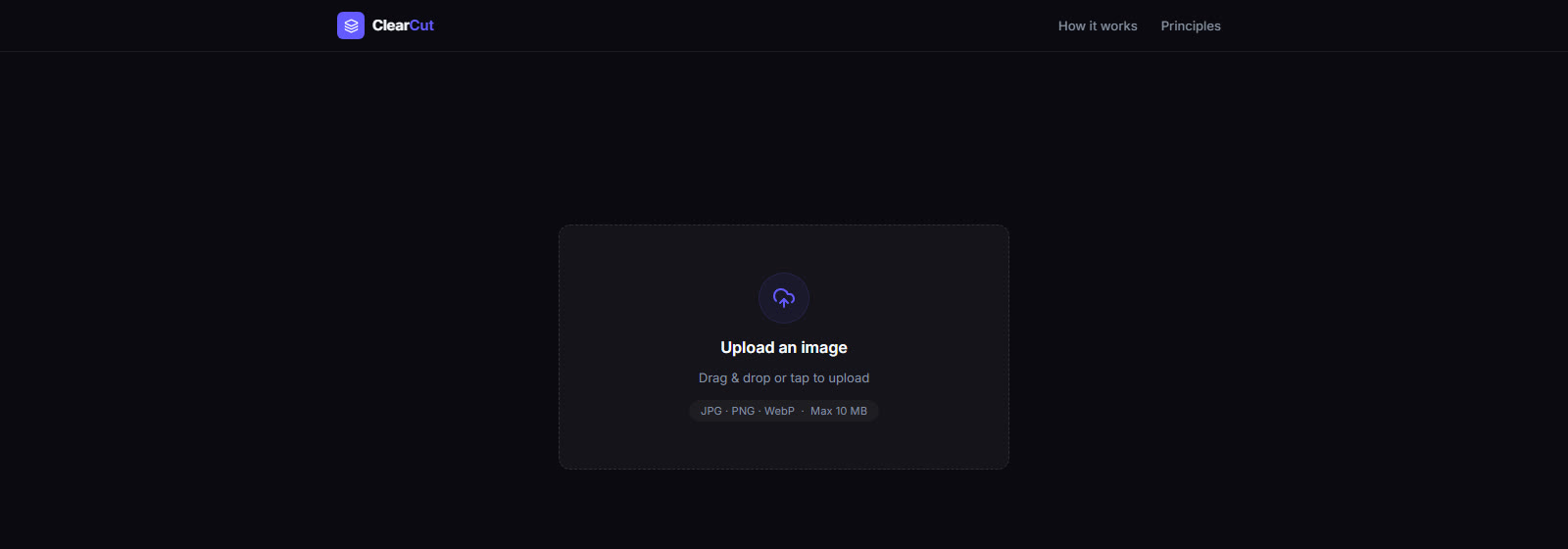
The whole product is one dropzone. No signup, no settings, no upsell — the restraint is the design.
Ten minutes is the headline, but the transferable part is knowing what to leave out and what to let AI do.
I'd built tools like this before and kept every one private, assuming someone had already made it. This is the one I shipped.
I needed a clean cut-out for a mockup. I opened a tab to find a background remover, hit a paywall, opened another, hit a watermark — and then realised the search was going to take longer than building the thing.
The itch
A small problem I kept paying for in minutes
This isn't a business idea; it's a recurring annoyance. Every mockup, every case study cover, every hero image needs a subject on a clean background. The existing tools all work, and they all extract something from you first — a signup, a watermark, a credit limit, a subscription. None of that is unreasonable, it just isn't worth it for a task I do a few times a week and need to take five seconds.
The reframe
The scope was the decision
Building fast isn't about typing fast — it's about deciding, up front, exactly how small the thing is allowed to be. One input, one output, no account, no options. Everything I didn't build is what made ten minutes possible, and it's also what makes the tool pleasant: there is nothing to learn, because there is nothing to choose.
Design principles
What kept it to one screen
One job, one control
The tool does exactly one thing, so the interface is exactly one affordance. Any setting I added would be a decision the user didn't ask to make.
No account, ever
The moment a five-second task needs a login, it stops being a five-second task. Friction here would defeat the entire reason the tool exists.
Show the cut, not a spinner
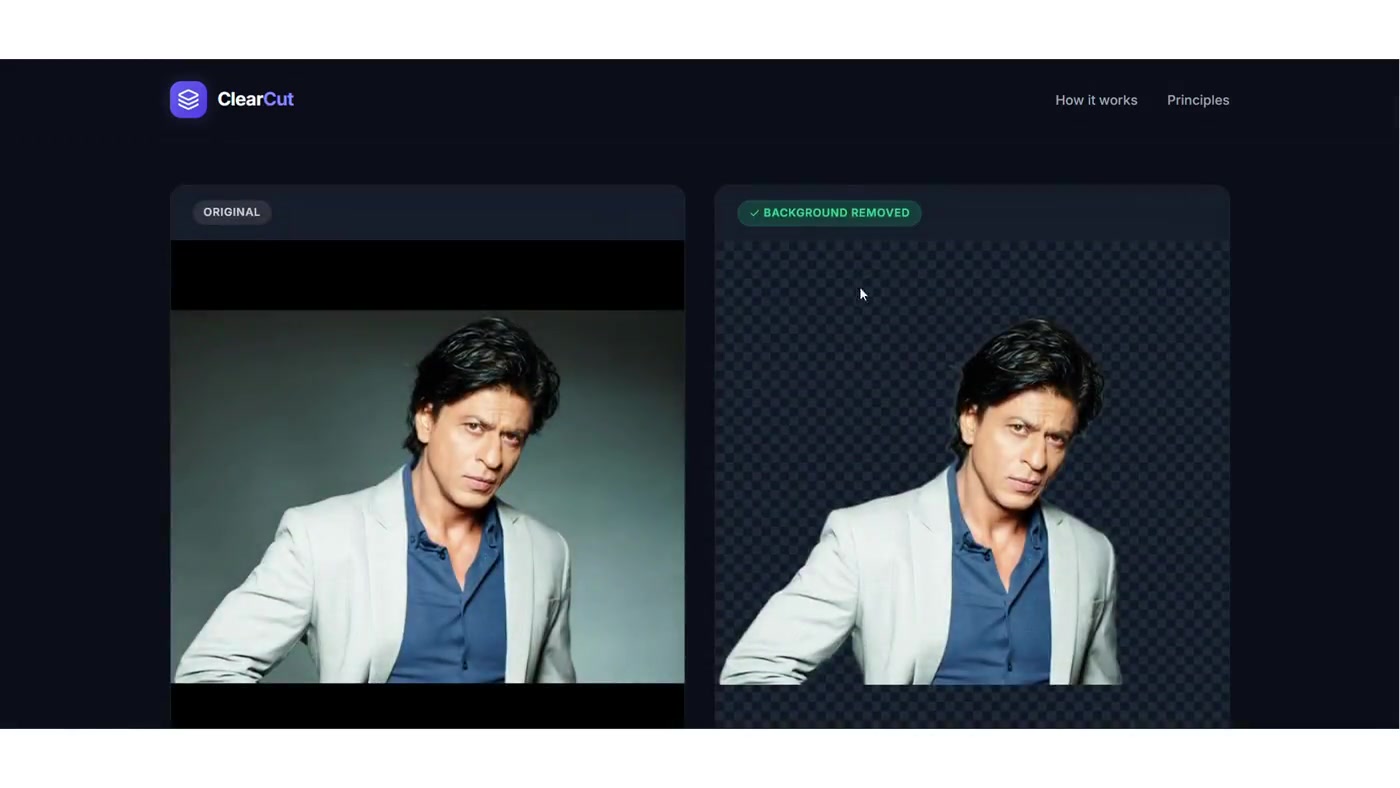
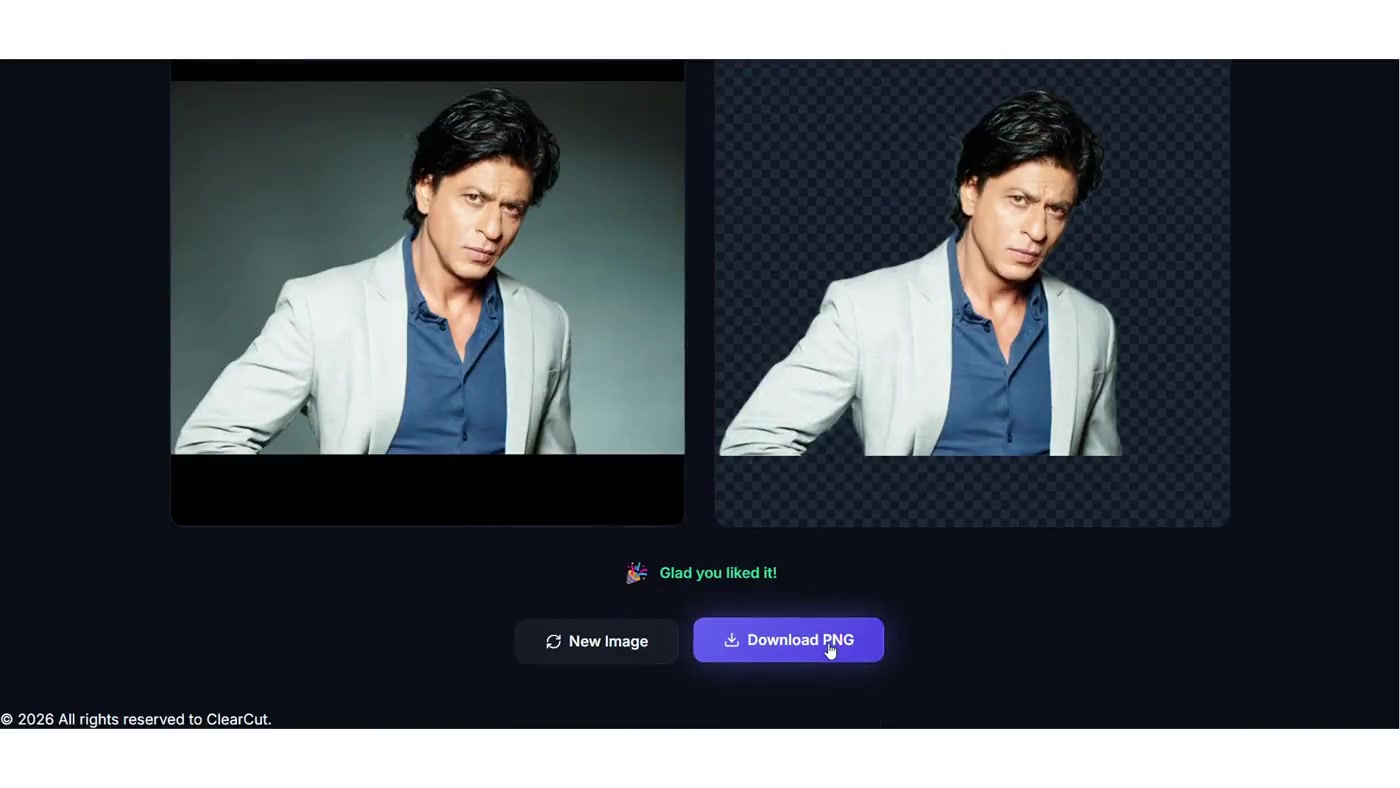
The result lands as an original-versus-removed comparison on a checkerboard, so you can judge the edges immediately rather than downloading to find out.
The honest part
The speed is the least interesting thing about it
Ten minutes makes a good headline and it's a bad lesson. What actually made it work was knowing what the product was before starting, having a clear enough mental model to describe it precisely, and using AI to collapse the distance between that description and a running app. The tool didn't supply the judgement about scope, restraint, or what the result screen needed to show. That part is still design.
The real story
I'd built things like this before and never shown anyone
There's a stack of small tools I made for myself and quietly kept, because the thought was always the same: someone has already built this, better. That instinct is why most of them never left my machine. ClearCut is the one I published — not because it's more original than the others, but because I decided that shipping it publicly was worth more than being certain it was new.
Key decisions
The calls, small as they were
Scope it to one input and one output before building
WhyDeciding the boundary first is what made the build fast. Every feature I could imagine — batch upload, background replacement, editing — would have turned a coffee break into a weekend and a tool into a product I'd have to maintain.
Show original and result together
WhyBackground removal succeeds or fails at the edges — hair, glasses, soft shadows. A side-by-side on a transparency checkerboard lets someone judge that instantly, instead of downloading a file to discover the mask is wrong.
No signup, no watermark, no limit
WhyI built this because every alternative charged me in friction. Reproducing that friction would have made the tool pointless for the one person it was definitely built for — me.
Publish it instead of keeping it
WhyThe build took ten minutes; the decision to make it public was the harder one. Sharing turns a private utility into something that compounds — feedback, momentum, and a reason to make the next one.
Where it stands
“Don't sit on it because someone already built it. Post it — not for validation, for momentum.”
More case studies